
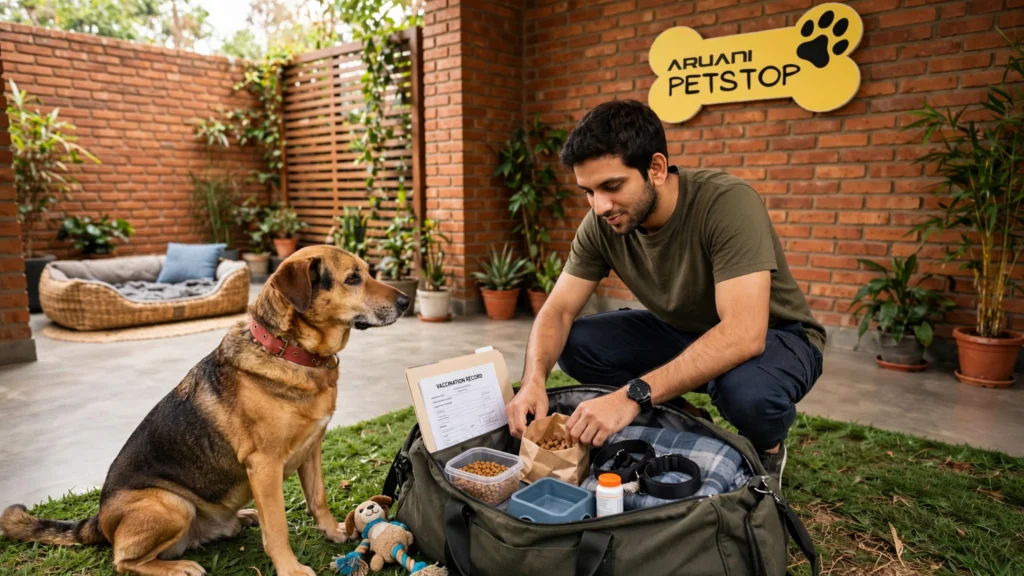
Leaving your dog at a boarding facility for the first time can feel stressful. A simple dog boarding checklist can make the process easier and help your dog stay comfortable, healthy, and settled while you’re away.
From pre-portioned food and medication to vaccination records, ID tags and familiar comfort items, this guide covers what to pack for dog boarding and what to prepare before drop-off.
If you’re boarding your dog at Aruani PetStop in Bangalore, it’s also a good idea to confirm in advance which items the facility provides and which items you should bring yourself.
Quick Dog Boarding Checklist
Before leaving your dog at boarding, check that you have:
- Familiar treats
- Medication and supplements
- Written medication instructions
- Up-to-date vaccination records
- Collar with updated ID tag
- Harness and leash
- Familiar toy or blanket
- Feeding instructions
- Special-care instructions
- Emergency contact information
- Veterinarian contact details
- Any facility-required documents
1. Pack Your Dog’s Regular Food
Food is one of the most important things to pack for a boarding stay.
If you’re providing your dog’s food, avoid suddenly changing their diet while they are away from home. Pack the food they normally eat and clearly explain how much they should receive.
How to pack dog food for boarding
For longer stays, consider:
- Pre-measuring individual meals
- Labelling each meal with your dog’s name
- Including clear feeding times
- Providing portion-size instructions
- Packing a little extra food in case your return is delayed
- Including approved treats separately
For example, instead of simply sending a large bag of food, you can provide instructions such as:
Breakfast: 1 cup at 8:00 AM
Dinner: 1 cup at 7:00 PM
Treats: Up to 2 approved treats per day
Clear instructions reduce the chance of confusion and help maintain your dog’s normal routine.
2. Bring Your Dog’s Favourite Treats
Familiar treats can make a boarding environment feel more comfortable.
Pack treats your dog already eats rather than introducing new foods immediately before or during boarding.
Tell the boarding team:
- Which treats are allowed
- How many treats your dog can have
- Whether your dog has food allergies
- Whether certain foods should be avoided
If your dog follows a strict diet, make this especially clear.
3. Pack Medications and Supplements
If your dog takes medication, make sure there is enough for the entire boarding period.
Keep medications in their original labelled packaging whenever possible and provide clear written instructions.
Include:
- Medication name
- Dosage
- Administration time
- Any storage requirements
- How it should be given
- Special instructions
Also tell the boarding staff about supplements or other regular treatments.
Important: Don’t leave medication instructions only as a verbal message. Written instructions are easier for caregivers to follow accurately.
4. Bring Vaccination and Health RecordsBring Vaccination And Health Records
Many boarding facilities require dogs to meet specific vaccination and health requirements.
Before boarding, keep your dog’s records ready, including applicable vaccinations such as:
Rabies
DHPP
Bordetella, where required by the facility
Requirements can vary between facilities, so confirm the current requirements before your dog’s stay.
Tick and Flea Treatment
Please ensure your dog’s tick and flea treatment is up to date before drop-off. A fresh boarding environment means close contact with other dogs, so an active infestation can spread quickly across the facility. Please check with your vet before giving your dog any tick medication — the right product, and how recently it can be given, depends on your dog’s weight, age, and health history.
Also provide relevant information about:
Allergies
Existing medical conditions
Recent health concerns
Dietary restrictions
Your veterinarian
5. Pack a Collar, ID Tag and Leash
Your dog’s identification and walking equipment should be in good condition.
Pack:
- Collar
- Updated ID tag
- Harness, if your dog normally uses one
- Familiar leash
Check that your contact information on the ID tag is current.
If your dog is microchipped, make sure the associated contact information is also up to date.
6. Bring a Familiar Comfort Item
One of the easiest ways to make boarding feel more familiar is to pack something that smells like home.
Good options include:
- Favourite blanket
- Small familiar bed
- Favourite toy
- Worn T-shirt carrying your scent
- Familiar comfort item
You don’t need to send your dog’s entire toy collection. One or two familiar items are usually enough.
Before packing valuable or sentimental belongings, check whether the boarding facility accepts personal items.
7. Write Down Your Dog’s Daily Routine
A boarding team can care for your dog more effectively when they understand their normal routine.
Provide information about:
Feeding
- Meal times
- Portion sizes
- Treats
- Dietary restrictions
Exercise
- Preferred activity level
- Walk schedule
- Play preferences
Behaviour
- How your dog behaves around other dogs
- Fear or anxiety triggers
- Commands they respond to
- Things that make them uncomfortable
Sleeping
- Normal bedtime
- Preferred sleeping arrangement
- Any nighttime habits
The more useful information you provide, the easier it is for caregivers to maintain familiar routines.
8. Provide Emergency Contact Information
Don’t rely only on your phone number.
Give the boarding facility:
- Your primary phone number
- An alternative emergency contact
- Your veterinarian’s contact details
- Any important medical information
If you’re travelling somewhere with limited phone access, tell the boarding team how they can reach you.
9. Pack Basic Travel Essentials
If you’re travelling with your dog to the boarding facility, keep a small travel bag ready.
Your dog travel checklist can include:
- Treats
- Waste bags
- Towels
- Cleaning wipes
- Leash
- Harness
- Travel crate or carrier, if required
These items are particularly useful if your journey to the boarding facility takes some time.
10. Check What the Boarding Facility Provides
Don’t automatically pack everything your dog owns.
Some boarding facilities may already provide items such as:
- Food and water bowls
- Bedding
- Toys
- Cleaning supplies
- Basic care equipment
Before your dog’s arrival, ask the facility:
“What should I bring, and what do you already provide?”
This can prevent unnecessary packing and reduce the number of personal items that could potentially get misplaced.
What Not to Pack for Dog Boarding
Some items are better left at home unless the facility specifically allows them.
Avoid packing:
- Expensive or irreplaceable toys
- Large quantities of unnecessary belongings
- New food your dog has never eaten
- Unlabelled medication
- Unsafe toys
- Excessive bedding
- Items the facility doesn’t permit
Always follow the boarding facility’s own policies.
How to Prepare Your Dog for Boarding
Packing is only part of preparing your dog.
Before the boarding date:
1. Confirm the booking
Check the drop-off and pick-up dates and times.
2. Check vaccination requirements
Make sure all required vaccinations and health documents are current.
3. Prepare food
Measure and label your dog’s meals if you are sending food with them.
4. Prepare medication
Count the required doses and provide written instructions.
5. Label belongings
Put your dog’s name on food containers, bags and personal items where practical.
6. Share special instructions
Tell the caregivers about dietary, medical, behavioural and exercise requirements.
7. Confirm facility policies
Ask what is provided and what personal items are allowed.
Preparing Your Dog for a Stay at Aruani PetStop
If you’re planning to board your dog at Aruani PetStop, prepare the essentials before arrival and communicate your dog’s routine clearly.
Aruani PetStop provides pet-care services including dog boarding and daycare, so owners can discuss their dog’s individual requirements before the stay.
For a smoother check-in, have your dog’s food, medical information, vaccination records, emergency contacts and special-care instructions ready.
It’s also worth confirming the current boarding requirements and what you need to bring before your dog’s scheduled arrival.
Dog Boarding Checklist for First-Time Boarders
If this is your dog’s first overnight stay away from home, use this simplified checklist:
- Regular food
- Extra food
- Familiar treats
- Medication
- Vaccination records
- Collar and ID tag
- Harness and leash
- Favourite toy
- Familiar blanket or T-shirt
- Feeding schedule
- Exercise instructions
- Behaviour information
- Emergency contact
- Veterinarian details
- Facility-required documents
Frequently Asked Questions
What do I need to pack for my dog when boarding?
The main essentials are regular food, medication, vaccination records, collar and ID tag, leash, familiar comfort items, feeding instructions and emergency contact information. Check with the boarding facility about additional requirements.
How do I pack my dog’s food for boarding?
Pre-measure your dog’s normal meals into labelled containers or bags and provide written instructions for portion sizes and feeding times. Pack some extra food in case your stay is extended unexpectedly.
Should I bring my dog’s own food to boarding?
If the boarding facility permits it, bringing your dog’s regular food can help maintain their normal diet and routine. Confirm the facility’s food policy before arrival.
What documents does my dog need for boarding?
Depending on the facility, you may need vaccination records, health information, medication instructions and emergency contact details. Ask the boarding facility for its current requirements.
Should I pack my dog’s favourite toy for boarding?
Yes, a familiar toy, blanket or T-shirt can provide a sense of familiarity. However, check the facility’s personal-item policy and avoid sending valuable or irreplaceable belongings.
What should I pack for a dog’s overnight stay?
For an overnight stay, pack regular food, treats, medication if required, vaccination records, collar and ID tag, leash, a familiar comfort item and written care instructions.
How can I reduce my dog’s stress during boarding?
Keeping your dog’s normal food and routine as consistent as possible can help. Familiar items such as a blanket or toy may also provide comfort. Give the boarding team clear information about your dog’s habits, preferences and triggers.
What should I tell a dog boarding facility about my pet?
Share your dog’s feeding schedule, dietary restrictions, medications, allergies, exercise routine, behaviour around people and other dogs, sleeping habits and any special-care requirements.
Final Check Before Drop-Off
Before you leave your dog at boarding, take one final look at your bag:
Food ✓ Medication ✓ Vaccination records ✓ Collar ✓ ID tag ✓ Leash ✓ Comfort item ✓ Feeding instructions ✓ Special-care instructions ✓ Emergency contacts ✓
A well-prepared boarding bag helps the caregivers understand your dog’s needs and gives your pet familiar essentials while you’re away.
If you’re looking for dog boarding in Bangalore, Aruani PetStop can be considered for pet boarding and daycare services. Contact the facility before booking to confirm current availability, requirements and what you need to bring for your dog’s stay.