
Bringing a new dog home is exciting, but it can also be confusing. A dog that seems quiet on the first day may behave completely differently a few weeks later. Some dogs hide, sleep more, eat less or seem nervous, while others become increasingly playful and confident as they become comfortable.
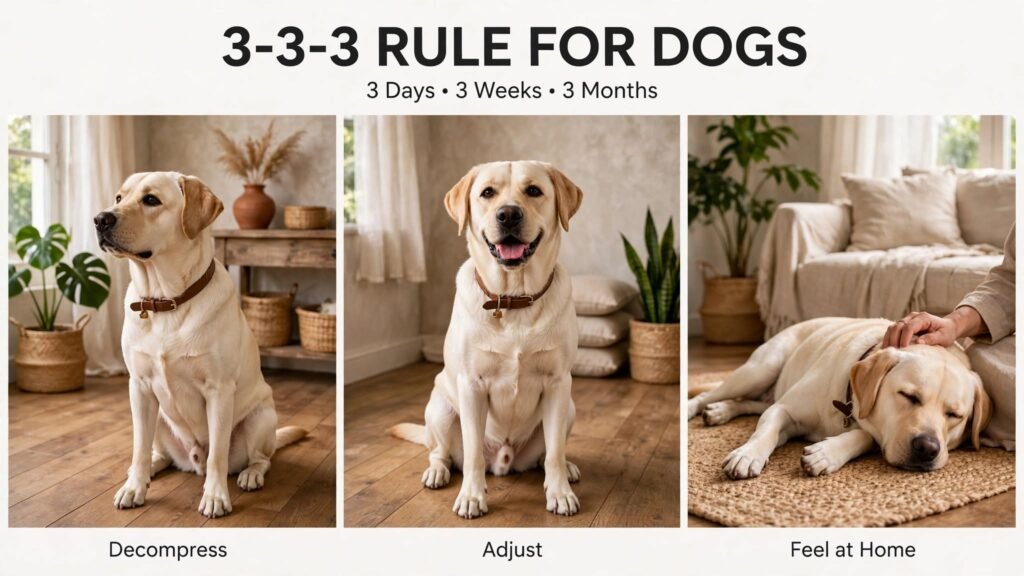
The 3-3-3 rule for dogs is a simple guideline that helps pet parents understand this adjustment process. It describes three broad stages: the first 3 days, the first 3 weeks, and the first 3 months.
The 3-3-3 rule is not a strict timetable. Every dog has a different history, personality, age, temperament and previous experience. Some dogs settle quickly, while others need considerably more time.
What Is the 3-3-3 Rule for Dogs?
The 3-3-3 rule is commonly used to describe how a newly adopted or rescued dog may adjust to a new home.
The basic idea is:
- First 3 days: Decompression and getting used to the new environment
- First 3 weeks: Learning the household routine and becoming more comfortable
- First 3 months: Building confidence, trust and a stronger sense of belonging
Think of the 3-3-3 rule as a framework rather than a countdown. Your dog does not have to be completely settled after exactly three days, three weeks or three months.
The 3-3-3 Rule at a Glance
| Adjustment Stage | What Your Dog May Experience | What Your Dog Needs |
|---|---|---|
| First 3 days | Stress, uncertainty, hiding or sleeping more | Quiet, safety and patience |
| First 3 weeks | More personality, curiosity and boundary testing | Routine, consistency and gentle training |
| First 3 months | Greater confidence, familiarity and bonding | Stability, enrichment and continued training |
Understanding these stages can help you avoid expecting too much too soon.
The First 3 Days: Give Your Dog Time to Decompress
The first few days can be overwhelming for a newly adopted dog.
Imagine suddenly being taken away from a familiar environment and introduced to new people, new smells, new sounds, a new house and a completely different routine. Even a friendly and confident dog may need time to understand what is happening.
What Can You Expect During the First 3 Days?
Your dog may:
- Hide under furniture
- Sleep more than usual
- Eat less than normal
- Drink differently
- Avoid eye contact
- Stay unusually quiet
- Whine or bark
- Follow you everywhere
- Pace around the house
- Have toilet accidents
- Become nervous around new sounds
- Avoid interaction
- Appear unusually calm
Some dogs may show the opposite behaviour and become extremely active or restless.
There is no single reaction that every dog will have.
How to Help Your Dog During the First 3 Days
1. Create a Safe Space
Give your dog a quiet area where they can rest without being constantly approached.
This could be a comfortable bed, crate or designated corner of the home.
The important thing is that the dog understands that this is a place where they can relax.
2. Keep the Routine Simple
Avoid making the first few days unnecessarily complicated.
Focus on basic needs:
- Food
- Fresh water
- Toilet breaks
- Sleep
- Short walks
- Quiet interaction
- Rest
A predictable routine can help your dog understand what to expect.
3. Don’t Force Affection
If your dog is hiding or avoiding interaction, allow them to approach you when they are ready.
Avoid repeatedly pulling them out of hiding, hugging them or forcing physical contact.
Trust develops through repeated positive experiences.
4. Limit Visitors
The first few days are usually not the best time to introduce your dog to a large number of people.
Give them time to understand their immediate environment before adding more stimulation.
5. Keep Walks Calm
Your dog may not be ready for long or highly stimulating outings immediately.
Start with manageable toilet breaks and short walks based on the dog’s comfort and physical needs.
What Not to Do During the First 3 Days
Avoid overwhelming your new dog with:
- Large gatherings
- Too many visitors
- Long trips
- Multiple new environments
- Forced interaction with other dogs
- Intense training sessions
- Excessive handling
- Punishment for fear-based behaviour
The goal of the first few days is not to teach your dog everything.
The goal is to help them feel safe.
The First 3 Weeks: Your Dog Starts Showing Their Personality
After several days, your dog may begin to understand that this new environment is becoming familiar.
This is often when pet parents notice a change in behaviour.
A dog that was quiet during the first week may suddenly become more playful, vocal, energetic or curious.
This does not necessarily mean the dog is becoming difficult.
It may simply mean the dog is becoming comfortable enough to show more of their natural personality.
What Might Change During the First 3 Weeks?
Your dog may start:
- Exploring more of the house
- Playing with toys
- Seeking attention
- Showing preferences
- Becoming more vocal
- Testing boundaries
- Showing more energy
- Becoming more attached to family members
- Showing fears or triggers that were not obvious initially
- Developing predictable eating and sleeping patterns
This is an important stage for building healthy routines.
Establish a Predictable Daily Routine
Dogs generally benefit from knowing what happens next.
Try to maintain consistent patterns for:
- Feeding
- Walks
- Toilet breaks
- Training
- Playtime
- Rest
- Bedtime
The schedule does not have to be perfect.
Consistency matters more than having a rigid timetable.
Start Gentle Training
Once your dog is becoming comfortable, you can gradually introduce basic training.
Depending on the dog’s age and experience, this may include:
- Responding to their name
- Sit
- Stay
- Come
- Leave it
- Loose-leash walking
- Settling on a mat
- Basic household boundaries
Use positive reinforcement and reward behaviours you want to see repeated.
Avoid punishment-based approaches that may increase fear or confusion.
Introduce New Experiences Gradually
It can be tempting to take your new dog everywhere once they seem comfortable.
Instead, introduce new experiences gradually.
Consider:
- New walking routes
- Different sounds
- New people
- Car journeys
- Grooming
- Other dogs
- New environments
Watch your dog’s body language and allow them time to process new experiences.
The First 3 Months: Building Confidence and Trust
Around the three-month mark, many dogs may have developed a stronger understanding of their new environment and routine.
They may:
- Recognise household routines
- Feel more comfortable resting
- Show more predictable behaviour
- Develop stronger bonds
- Explore with greater confidence
- Understand basic household expectations
- Become more comfortable with regular activities
However, three months should not be treated as a deadline.
Some dogs may feel comfortable much earlier. Others, particularly dogs with difficult previous experiences, may need much longer.
What Should You Focus on During This Stage?
Continue building:
Trust
Be consistent in how you interact with your dog.
Training
Keep reinforcing previously learned behaviours.
Socialisation
Introduce appropriate people, animals and environments at a pace your dog can handle.
Enrichment
Give your dog opportunities to sniff, explore, play and solve simple problems.
Exercise
Provide age-appropriate physical activity based on your dog’s health and individual needs.
Does Every Dog Follow the 3-3-3 Rule?
No.
The 3-3-3 rule is a general guideline, not a fixed scientific timetable for every dog.
The adjustment period can vary depending on factors such as:
- Age
- Breed and individual temperament
- Previous experiences
- Rescue or shelter history
- Socialisation
- Health
- Previous training
- Household environment
- Other pets
- Number of people in the home
- Changes in routine
A confident adult dog may settle into a new home quickly, while a fearful or previously stressed dog may require much more time.
Instead of asking, “Should my dog be settled by now?”, look at whether your dog is making gradual progress.
3-3-3 Rule for Rescue Dogs vs Puppies
The adjustment process can look different for a rescue dog and a puppy.
| Factor | Rescue Dog | Puppy |
|---|---|---|
| Main adjustment | New home and previous experiences | New home and developmental changes |
| Training | May have previous training or habits | Usually starting with basic training |
| Behaviour | Previous experiences may influence behaviour | Behaviour is still developing |
| Routine | May need time to understand the new routine | Needs a consistent routine from the beginning |
| Socialisation | Should be gradual and individual | Requires appropriate age-based socialisation |
| Adjustment speed | Can vary significantly | Also varies by individual puppy |
The important thing is to treat the dog in front of you as an individual rather than expecting a standard timeline.
What If My Dog Is Not Settled After 3 Months?
Don’t panic.
The 3-3-3 rule does not mean that every dog should be completely settled after 90 days.
Instead, look for positive changes.
Ask yourself:
- Is my dog eating comfortably?
- Are they sleeping better?
- Are they exploring more?
- Are they becoming more comfortable around the family?
- Are they showing curiosity?
- Are they following household routines?
- Are stressful situations becoming easier to manage?
- Is their behaviour becoming more predictable?
Progress can be gradual.
If you are concerned about persistent fear, aggression, significant appetite changes, illness, severe anxiety or other unusual behaviour, speak with a veterinarian or qualified animal behaviour professional.
How Can You Help a New Dog Adjust?
There is no shortcut that makes every dog settle instantly.
Instead, focus on creating positive and predictable experiences.
1. Maintain a Consistent Routine
Try to keep meals, walks, rest and bedtime reasonably predictable.
2. Give Your Dog a Safe Resting Area
Your dog should have a place where they can relax without being disturbed.
3. Use Positive Reinforcement
Reward calm and desirable behaviours instead of relying on punishment.
4. Avoid Overwhelming Introductions
Introduce new people, dogs and places gradually.
5. Provide Mental Enrichment
Sniffing, food puzzles, appropriate toys and simple training exercises can provide mental stimulation.
6. Allow Plenty of Sleep
Dogs need substantial rest, especially when adjusting to a new environment.
7. Observe Body Language
Pay attention to signs that your dog may be uncomfortable, including:
- Turning away
- Lip licking
- Yawning
- Hiding
- Cowering
- Excessive panting
- Pacing
- Freezing
- Avoiding interaction
Give your dog space when they show signs of stress.
Can Daycare or Boarding Help During the 3-3-3 Period?
Daycare and boarding can be useful parts of a dog’s care routine, but they are not automatically suitable for every newly adopted dog.
Before introducing a new dog to daycare or boarding, consider their individual temperament and current adjustment stage.
Ask:
- Is my dog comfortable with unfamiliar people?
- How does my dog respond to other dogs?
- Can my dog relax in a new environment?
- Does my dog have a predictable routine?
- Does the facility provide supervised interaction?
- Is there a quiet place for rest?
- Can the staff understand and follow my dog’s individual routine?
A professional pet-care environment should focus on the dog’s safety, comfort and individual needs rather than simply keeping them busy.
For pet parents looking for supervised pet care, daycare, boarding and enrichment, Aruani PetStop provides a dedicated environment where dogs can receive structured care while their owners are away.
The right type of care depends on the individual dog, so it is always useful to discuss your dog’s temperament, routine and specific needs with the pet-care team before booking.
30-60-90 Day New Dog Adjustment Checklist
Use this checklist to monitor your dog’s progress without treating the calendar as a deadline.
First 30 Days
- Establish a feeding routine
- Establish a toilet routine
- Create a safe sleeping area
- Learn your dog’s body language
- Identify potential triggers
- Start basic training
- Establish regular rest periods
- Keep introductions gradual
By 60 Days
- Continue basic training
- Strengthen household routines
- Gradually expand walks and experiences
- Introduce appropriate enrichment
- Build confidence through positive experiences
- Continue observing behaviour and triggers
By 90 Days
- Review behavioural progress
- Continue training
- Maintain appropriate socialisation
- Provide regular enrichment
- Adjust exercise based on your dog’s needs
- Continue building trust and confidence
Common Mistakes Pet Parents Make With the 3-3-3 Rule
Mistake 1: Expecting Immediate Adjustment
A dog may need time before feeling comfortable.
Mistake 2: Introducing Too Many People
Meeting everyone immediately can create unnecessary stress.
Mistake 3: Assuming Quiet Means Comfortable
A very quiet dog may still be overwhelmed.
Mistake 4: Giving Too Much Freedom Too Soon
Allowing access to the entire house immediately may make some dogs feel overwhelmed.
Mistake 5: Punishing Accidents
Toilet accidents can happen during adjustment. Punishment can increase fear and confusion.
Mistake 6: Comparing Your Dog With Another Dog
Every dog’s history and temperament are different.
Mistake 7: Treating Three Months as a Deadline
The 3-3-3 guideline is not a promise that every dog will be completely settled in 90 days.
3-3-3 Rule for Dogs: Frequently Asked Questions
What is the 3-3-3 rule for dogs?
The 3-3-3 rule is a general guideline describing how a newly adopted or rescued dog may adjust over the first three days, three weeks and three months. It is a flexible framework rather than a fixed timetable.
What happens during the first 3 days with a rescue dog?
A rescue dog may experience stress, uncertainty, tiredness, reduced appetite, hiding or nervous behaviour during the first few days. A calm environment, predictable routine and plenty of rest can help.
What should I do during the first 3 weeks?
Focus on establishing a consistent routine, building trust, introducing gentle training and gradually exposing your dog to new people, places and experiences.
How long does it take a rescue dog to feel at home?
There is no universal timeline. Some dogs adjust quickly, while others may need several weeks or months before they become fully comfortable.
Does every rescue dog follow the 3-3-3 rule?
No. The 3-3-3 rule is a general guideline. Individual dogs may adjust faster or slower depending on their history, temperament, health and environment.
Can a dog take longer than 3 months to adjust?
Yes. Three months is not a deadline. Some dogs, especially those with difficult previous experiences, may need additional time and support.
Should I socialise my rescue dog immediately?
Socialisation should be gradual and appropriate to the individual dog. Avoid overwhelming a newly adopted dog with too many new people, animals and environments at once.
Can daycare help a newly adopted dog?
It can be appropriate for some dogs, but not every newly adopted dog is ready for daycare immediately. Consider the dog’s temperament, comfort around people and dogs, stress level and ability to relax in unfamiliar environments.
Why is my rescue dog behaving differently after a few weeks?
A dog may behave differently once they become more comfortable. A quiet dog may become more playful, energetic or vocal, and previously hidden behaviours may become noticeable as the dog settles in.
Is the 3-3-3 rule scientifically proven?
The 3-3-3 rule is best understood as a practical adjustment guideline rather than a precise scientific timetable that applies equally to every dog. Individual adjustment periods can vary significantly.
Final Thoughts: Give Your Dog Time to Become Comfortable
The most important lesson behind the 3-3-3 rule is simple: don’t rush the adjustment process.
The first few days are about safety and decompression.
The first few weeks are about building routines and understanding your dog’s personality.
The following months are about strengthening trust, confidence, training and your relationship.
Your dog may follow this pattern closely, or their journey may look completely different.
Focus less on the calendar and more on progress.
With patience, consistency, appropriate enrichment and positive experiences, you can give your dog the best possible foundation for a comfortable and happy life.
About Aruani PetStop
Aruani PetStop is a pet-care destination designed to provide dogs with professional care, enrichment and a comfortable environment. From daycare and boarding to grooming and other pet-care experiences, the focus is on providing appropriate care based on each pet’s individual needs.
If you’re introducing a new dog into your family or looking for reliable care while you’re away, understanding your dog’s temperament, routine and comfort level is an important first step.