
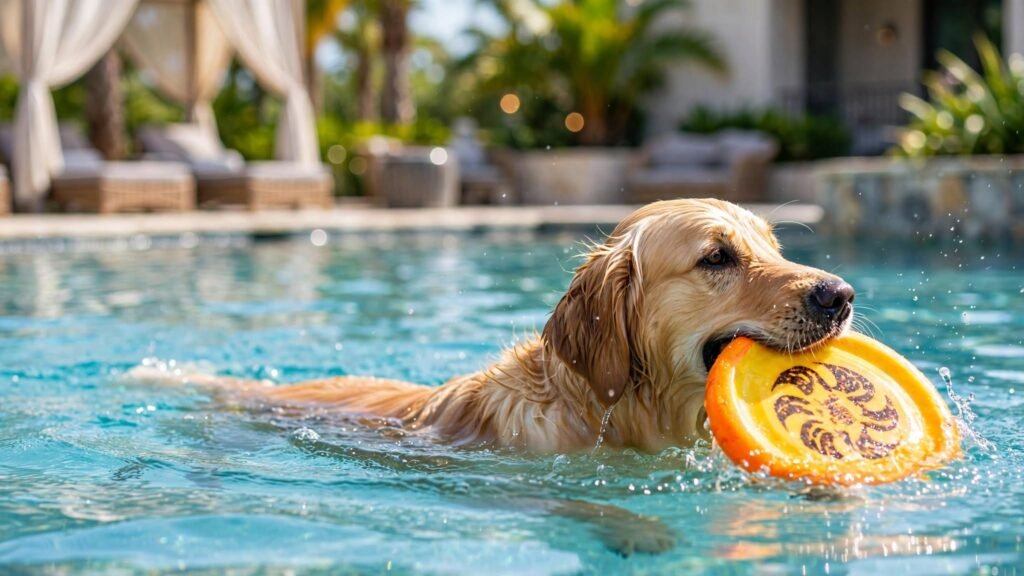
Looking for a dog swimming pool in Bangalore where your pet can exercise, stay active and enjoy the water?
Dog swimming is becoming increasingly popular among Bangalore pet parents—not just as a fun activity, but also as a low-impact form of exercise. Swimming allows dogs to move their bodies while the buoyancy of water reduces the amount of weight placed on their joints.
For senior dogs, overweight dogs and breeds that need regular low-impact exercise, swimming can be an excellent addition to a healthy lifestyle.
At Aruani PetStop, dogs can enjoy a pet-friendly swimming and recreation experience designed around exercise, play and enrichment.
Important: Recreational dog swimming and clinical canine hydrotherapy are not exactly the same. Clinical hydrotherapy is generally part of a rehabilitation programme and may be provided under veterinary or canine physiotherapy supervision. If your dog has arthritis, hip dysplasia, has undergone surgery or has another medical condition, consult your veterinarian before starting swimming.
What Is Dog Hydrotherapy?
Dog hydrotherapy is a form of water-based exercise or rehabilitation for dogs.
The water provides buoyancy, meaning it supports part of the dog’s body weight while the dog moves. Water also creates resistance, which can make swimming physically demanding without requiring the same type of impact associated with running or jumping on hard surfaces.
Clinical hydrotherapy can involve different approaches, including:
- Underwater treadmill therapy
- Controlled swimming
- Water-based rehabilitation exercises
- Muscle conditioning
- Mobility-focused exercises
The type of hydrotherapy recommended depends on the dog’s age, health condition, fitness level and rehabilitation goals.
For healthy dogs, swimming can simply be an enjoyable form of exercise. For dogs recovering from an injury or surgery, water-based exercise should only be undertaken with appropriate veterinary guidance.
Is Swimming Good for Dogs?
For many dogs, yes.
Swimming provides a full-body workout because dogs use their legs, core and other muscles to stay afloat and move through the water.
Compared with some high-impact activities, swimming can also provide exercise with less direct loading on the joints.
Some potential benefits of appropriate swimming include:
- Low-impact exercise
- Full-body muscle engagement
- Cardiovascular conditioning
- Energy expenditure
- Support for healthy weight management
- Improved physical fitness
- Mental stimulation
- A fun alternative to routine walks
However, swimming is not suitable for every dog. A dog’s breed, age, physical condition, swimming ability and comfort around water should always be considered.
How Does Swimming Support Joint Health?
One of the biggest advantages of water-based exercise is buoyancy.
When a dog swims, the water supports much of its body weight. This can reduce the amount of load placed on the limbs and joints compared with certain land-based exercises.
This is why water-based exercise is often considered for dogs that need lower-impact movement.
For example, a senior dog that finds long walks uncomfortable may potentially find swimming easier because the water provides additional support.
Swimming can also provide resistance, allowing dogs to work their muscles while moving through the water.
Can Swimming Help Dogs With Arthritis?
Swimming may be useful as a low-impact exercise option for some dogs with arthritis, but it should not be presented as a cure or replacement for veterinary treatment.
Dogs with arthritis have different levels of mobility and pain. Some may benefit from controlled water-based exercise, while others may require a different rehabilitation approach.
If your dog has arthritis:
- Speak to your veterinarian first.
- Find out whether swimming is appropriate.
- Start with short sessions.
- Monitor your dog’s comfort and fatigue.
- Stop if your dog shows signs of pain, distress or excessive tiredness.
For dogs undergoing rehabilitation, professional veterinary physiotherapy or clinical hydrotherapy may be more appropriate than recreational swimming.
Can Swimming Help Dogs With Hip Dysplasia?
Hip dysplasia is a joint condition that can affect dogs, particularly larger breeds.
Swimming may provide a form of low-impact movement because the water supports the dog’s body while it exercises.
Breeds commonly associated with hip dysplasia include:
- Labrador Retrievers
- Golden Retrievers
- German Shepherds
- Great Danes
- Rottweilers
- Other large and giant breeds
However, every dog is different.
If your dog has been diagnosed with hip dysplasia, do not begin an exercise programme based solely on information online. Your veterinarian can advise whether swimming is appropriate and whether a structured rehabilitation programme is needed.
Swimming for Senior Dogs
Older dogs still need physical activity, but their exercise requirements can change with age.
Senior dogs may experience:
- Reduced stamina
- Joint stiffness
- Muscle loss
- Weight gain
- Reduced mobility
Swimming can provide an alternative way to stay physically active without relying entirely on running or jumping.
Short, controlled swimming sessions may be more appropriate for an older dog than intense exercise.
Always allow your dog to rest and monitor how they respond during and after swimming.
Can Swimming Help Dogs Lose Weight?
Dog swimming can support a weight-management routine, but swimming alone isn’t a complete weight-loss programme.
When a dog swims, it uses multiple muscle groups and expends energy. Regular appropriate exercise, combined with suitable nutrition, can contribute to maintaining a healthy body weight.
Weight management should consider:
- Daily calorie intake
- Food portions
- Treats
- Breed
- Age
- Existing health conditions
- Daily activity
- Body condition
If your dog is overweight or obese, speak with your veterinarian before significantly increasing exercise.
A healthy weight is particularly important for dogs with joint problems because carrying excess weight can place additional stress on the musculoskeletal system.
Why Swimming Can Be Great for Labradors and Golden Retrievers
Labradors and Golden Retrievers are famously enthusiastic about water.
They are also active, medium-to-large breeds that generally benefit from regular physical activity.
Swimming can provide these dogs with an opportunity to:
- Burn energy
- Exercise multiple muscle groups
- Enjoy water-based enrichment
- Maintain fitness
- Add variety to their exercise routine
For senior or overweight Labradors and Golden Retrievers, exercise should be adjusted according to their individual fitness and health needs.
If your dog has hip dysplasia, arthritis or another orthopedic condition, consult your veterinarian before using swimming as a fitness or rehabilitation activity.
Swimming vs Walking for Dogs
Walking and swimming offer different benefits.
| Walking | Swimming |
|---|---|
| Easy to incorporate into daily routines | Provides water-based exercise |
| Provides outdoor stimulation | Water provides buoyancy |
| Supports regular movement | Engages multiple muscle groups |
| Suitable for many healthy dogs | Can provide a lower-impact exercise option |
| Easy to control duration | Requires access to a suitable pool |
For a healthy dog, swimming doesn’t necessarily need to replace walking.
Instead, it can be another form of suitable exercise that adds variety to your dog’s routine.
Dog Swimming for Bangalore’s Weather
Bangalore’s warm weather can make outdoor exercise uncomfortable at certain times of the day.
Swimming can provide dogs with a refreshing way to stay active while enjoying water-based recreation.
However, swimming should not be used simply to compensate for excessive heat. Dogs can still become tired or overheated depending on the environment, activity level and individual health.
Always provide access to fresh drinking water and allow your dog sufficient rest.
Is Dog Swimming Safe?
Swimming can be safe for many dogs when properly supervised, but not every dog is a natural swimmer.
Pet parents should never assume that a dog can swim simply because it belongs to a particular breed.
Before allowing your dog into a pool, consider:
Swimming Ability
Some dogs are naturally comfortable in water, while others may be nervous or inexperienced.
Age
Puppies and senior dogs may need additional care and closer supervision.
Health
Dogs with respiratory, cardiac, orthopedic or other medical conditions may require veterinary clearance.
Supervision
Dogs should never be left unattended around water.
Entry and Exit
A pool should have a safe and practical way for dogs to enter and leave the water.
Fatigue
Swimming can be physically demanding. Dogs should be given regular breaks.
How to Introduce Your Dog to Swimming
If your dog has never swum before, don’t rush the process.
Step 1: Let Your Dog Explore
Allow your dog to become familiar with the surroundings before entering the water.
Step 2: Introduce the Water Gradually
Never force a nervous dog into a pool.
Step 3: Keep the First Session Short
The objective of the first session should be comfort and confidence rather than endurance.
Step 4: Watch Your Dog Closely
Look for signs of stress, panic or excessive fatigue.
Step 5: Give Plenty of Breaks
Swimming can be surprisingly tiring, even for active dogs.
Step 6: Dry Your Dog Properly
After swimming, rinse and dry your dog as appropriate to keep them comfortable.
Recreational Dog Swimming vs Clinical Hydrotherapy
This distinction is particularly important for pet parents searching for dog hydrotherapy in Bangalore.
Recreational Dog Swimming
The primary purpose is generally:
- Exercise
- Recreation
- Play
- Fitness
- Enrichment
Clinical Canine Hydrotherapy
Clinical hydrotherapy is generally associated with:
- Rehabilitation
- Recovery programmes
- Mobility support
- Muscle conditioning
- Post-operative rehabilitation
Clinical hydrotherapy may involve specialized equipment such as underwater treadmills and structured programmes supervised by veterinary professionals or qualified canine physiotherapists.
Therefore, if your dog has a medical diagnosis, surgery history or significant mobility problem, speak to your veterinarian about the most appropriate form of therapy.
What Should You Look for in a Dog Swimming Facility?
If you’re searching for a dog swimming pool in Bangalore, don’t choose a facility based only on whether it has a pool.
Consider:
- Pool safety
- Supervision
- Water hygiene
- Safe entry and exit
- Staff experience with dogs
- Swimming environment
- Session duration
- Dog comfort
- Facilities for rest after swimming
- Clear health and safety policies
A good dog swimming experience should be enjoyable for your pet while prioritizing safety.
Dog Swimming Near Sarjapur Road
Pet parents living around Sarjapur, Whitefield, Dommasandra and surrounding areas may be searching for convenient dog-friendly activities where their pets can exercise and play.
Aruani PetStop provides a pet-focused environment where dogs can enjoy swimming, recreation and other pet-friendly experiences.
For pet parents looking for a dog swimming pool near Sarjapur Road, choosing a convenient facility can make it easier to include swimming as part of a regular enrichment and exercise routine.
Why Choose Aruani PetStop?
At Aruani PetStop, swimming is part of a broader pet experience focused on activity, recreation and enrichment.
Our goal is to provide dogs with an environment where they can:
- Exercise
- Play
- Explore
- Socialize
- Enjoy water-based activities
- Spend quality time outside their normal routine
Whether you have an energetic Labrador looking to burn off some energy, a Golden Retriever that loves water, or a dog that simply enjoys trying new activities, swimming can be an exciting addition to their routine.
For dogs with medical or rehabilitation needs, we recommend consulting your veterinarian first to determine whether swimming or clinical hydrotherapy is appropriate.
Frequently Asked Questions About Dog Hydrotherapy & Swimming in Bangalore
Does swimming help dogs lose weight?
Swimming can contribute to calorie expenditure and physical activity, making it a potential component of a healthy weight-management programme. Diet and overall activity remain important.
Can hydrotherapy help dogs with arthritis?
Water-based exercise may provide low-impact movement for some dogs with arthritis. However, treatment should be individualized, and veterinary advice is recommended before starting hydrotherapy.
Is swimming good for dogs with joint problems?
Swimming can provide buoyancy and reduce the amount of weight supported by the limbs during exercise. Whether it is appropriate depends on the dog’s individual condition.
Can senior dogs go swimming?
Many senior dogs can enjoy swimming, but their exercise needs may differ from those of younger dogs. Shorter sessions, close supervision and veterinary guidance may be appropriate for dogs with health problems.
Can swimming help dogs with hip dysplasia?
Swimming may provide low-impact exercise for some dogs with hip dysplasia. However, dogs with diagnosed hip dysplasia should be assessed by a veterinarian before beginning a swimming or rehabilitation programme.
How long should a dog swim?
There is no universal duration. A dog’s age, fitness, swimming experience and health should determine the appropriate session length. Beginners should start gradually with sufficient breaks.
Where can I find a dog swimming pool in Bangalore?
Bangalore has several facilities offering dog swimming and, in some cases, clinical hydrotherapy. Pet parents should choose a facility based on their dog’s needs, the type of swimming or therapy offered, supervision and safety standards.
Is dog hydrotherapy the same as swimming?
No. Recreational swimming is primarily exercise and recreation, while clinical hydrotherapy is generally structured around rehabilitation or specific health goals.
Is swimming safe for Labradors and Golden Retrievers?
Many Labradors and Golden Retrievers enjoy swimming, but individual dogs have different swimming abilities. They should always be introduced to water gradually and supervised.
Give Your Dog a New Way to Exercise
Swimming can be more than a fun day out for your dog. For suitable pets, it can provide full-body exercise, water-based enrichment and a low-impact alternative to some traditional activities.
If you’re searching for a dog swimming pool in Bangalore, exploring canine swimming in Sarjapur, or simply looking for a new activity for your pet, Aruani PetStop offers a pet-friendly environment where dogs can swim, play and stay active.
Bring your dog to Aruani PetStop and let them discover the fun of swimming and outdoor pet recreation.
Aruani PetStop — Where pets play, explore and enjoy.